
The Ministry Payout System opens with a story. A pastor secretly funneled millions in church donations into a hidden Bitcoin wallet. That money has now been “recovered” by a “Reverend Paul Hogan” and a tech expert named “James Lennon.” Through a 47-second phone tap, you can supposedly claim your share, anywhere from $100 to $1,000 a day.
It’s a vivid story but none of it is true.
There is no documented church scandal matching this description. There is no recovered Bitcoin wallet. There is no mechanism by which tapping your phone for 47 seconds generates four-figure daily payouts from a pool of money that doesn’t exist.
First , This Is Important
Hey, my name is Mark. 15+ years reviewing online business programmes. If you’re looking for a legitimate way to build online income, see what I recommend below before reading any further.
👉 My #1 Recommendation for Building a Real Online Income

Key Takeaways
- Ministry Payout System claims a 47-second phone tap unlocks $100 to $1,000 in daily payouts from “recovered” church donation funds
- The named creators, “Reverend Paul Hogan” and “James Lennon,” have no verifiable real-world identities
- No documented chapel scandal, recovered Bitcoin wallet, or legal distribution fund exists anywhere in public record
- Entry price is $27, positioned as a one-time fee but almost certainly followed by upsells
- The 60-day money-back guarantee is unenforceable against an anonymous, unreachable operator
- The pitch specifically targets seniors, veterans, and people in financial distress
- Verdict: Scam, do not enter payment details
👉 My #1 Recommendation for Building a Real Online Income
What Is the Ministry Payout System?
Strip away the church framing and the Ministry Payout System is the same template documented across dozens of products on this site: pay a small entry fee, complete meaningless micro-tasks like watching a video or answering a survey, and wait for a large payout that never arrives.
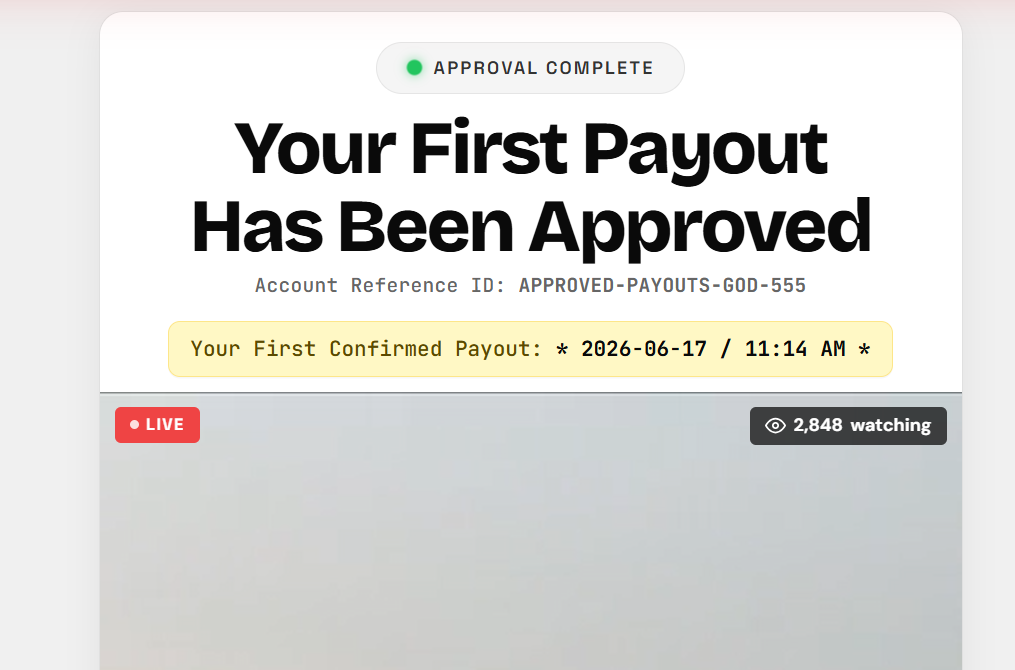
The “recovered donations” story exists for one specific reason. It makes a transparently impossible income claim feel moral rather than suspicious. You’re not being asked to gamble on a sketchy system, you’re being invited to claim money that was stolen from a charity and is now rightfully being returned to people like you. That framing is designed to disable the scepticism a more conventional pitch would trigger.
No part of the backstory holds up. There is no public record of a church donation scandal matching this description, no named individuals with any independent verification, and no payment infrastructure anywhere that distributes four-figure daily sums to strangers for tapping a screen.
👉 My #1 Recommendation for Building a Real Online Income
Who Are “Reverend Paul Hogan” and “James Lennon”?
Neither name has any traceable presence outside this product. No church record, no ordination history, no news coverage of the scandal they describe, and no independent professional background for the “tech expert” who supposedly built the payout system.
Faceless or fabricated personas are a hallmark of this scam category. We’ve documented the same pattern with “William Carter” in the G-Labs 95 review and “Sam Evans” in the Free Money Card V365 review. A named character with a sympathetic backstory creates emotional investment faster than an anonymous sales page, while still providing zero real accountability if something goes wrong.
The Payout Claim Doesn’t Survive Basic Scrutiny
This is the part that matters most. If the income claim is impossible, nothing else about the product needs to be evaluated.
No legitimate system pays strangers $100 to $1,000 a day for a 47-second action. There is no advertiser, platform, or business model that generates that kind of return from a screen tap. Once you understand that the foundational claim cannot be true, the rest of the sales page, the testimonials, the urgency, the guarantee, is just set dressing around an impossible premise.
The “47 seconds” detail is chosen deliberately. A number that small implies the task is too trivial to carry any real risk. That’s the trick. The risk isn’t in the 47 seconds, it’s in the $27 payment, your card details now sitting with an anonymous operator, and the time you’ll spend chasing money that was never coming.
Where the $27 Actually Goes
The $27 is not really the price of the product. It’s the mechanism for capturing your payment details. Products built on this template typically follow the entry fee with a wall of upsells, each one promising that the real payout is one more purchase away.
Beyond the upsells, your name, email, and card information now belong to an operator running a knowingly fraudulent pitch. That data has resale value regardless of whether you ever buy anything else from them. Expect the possibility of recurring charges, your details being sold into other scam funnels, and follow-up “recovery service” offers that target people who’ve already lost money once.
👉 My #1 Recommendation for Building a Real Online Income
Who This Targets
The pitch leans specifically on a few audiences: seniors and retirees on fixed incomes, veterans through a “we owe this to those who served” framing, stay-at-home parents who want flexible income, and anyone currently in financial distress. People newer to the internet who haven’t yet learned to recognise this template are also disproportionately targeted.
That targeting is what makes this particular scam worse than most. It isn’t just taking money, it’s taking money from people who are often least able to absorb the loss, using a fake charity story specifically chosen to lower their guard.
The Fake 60-Day Guarantee
A money-back guarantee only means something if there’s a real party on the other end who can be held to it. Here, the operator is anonymous and unreachable through any verifiable channel. A 60-day promise from a seller you cannot identify or contact provides no actual protection.
What to Do If You’ve Already Paid
Contact your bank or card provider immediately and dispute the charge. Treat it as a fraud event rather than a regular refund request.
Watch your statements closely for any further charges in the weeks following your purchase. Be cautious of any follow-up contact offering to “recover” your lost funds for an additional fee, this is a documented second wave that specifically targets people who’ve already been scammed once.
Report the offer to the FTC at ReportFraud.ftc.gov or your local consumer protection authority.
👉 My #1 Recommendation for Building a Real Online Income
Red Flags
| Red Flag | Present in Ministry Payout System |
|---|---|
| Fabricated charity or church scandal backstory | Yes |
| Named creators with no verifiable identity | Yes, “Reverend Paul Hogan” and “James Lennon” |
| Mathematically impossible daily payout claim | Yes, $100 to $1,000/day for a 47-second tap |
| Manufactured scarcity (“only 500 spots”) | Yes |
| Refund guarantee from an anonymous, unreachable operator | Yes |
| Targets vulnerable groups specifically | Yes, seniors, veterans, financially distressed |
Final Verdict
The Ministry Payout System is a scam. The pastor scandal is invented, the recovered Bitcoin fund doesn’t exist, the named creators have no verifiable identity, and no system on earth pays strangers four figures a day for tapping a phone screen for 47 seconds.
The $27 entry fee exists to capture your payment details and route you into an upsell funnel. The 60-day guarantee is worthless against an operator you can’t reach. And the church framing exists for one reason: to make an impossible offer feel like something you’d be wrong to turn down.
Close the page. Don’t enter your payment details.
What to Do Instead
If you want a real income model that pays consistently without an invented charity story behind it, see my full guide on how to make money online. Local lead generation pairs real businesses with real customers and pays monthly, no recovered funds, no anonymous reverends, no magic taps.
👉 My #1 Recommendation for Building a Real Online Income
FAQ
Is the Ministry Payout System a scam? Yes. The backstory is fabricated, the named creators are unverifiable, and the daily payout claim has no legitimate mechanism behind it.
Will I really get paid $100 to $1,000 a day? No. No platform or system pays strangers that amount for a 47-second phone tap. The claim is mathematically impossible regardless of the story wrapped around it.
Is there really a 60-day money-back guarantee? A guarantee is stated, but it comes from an anonymous operator with no verifiable identity or contact method. It provides no real protection.
Who are Reverend Paul Hogan and James Lennon? Names attached to no verifiable real-world identity, no church record, and no independent professional background. Almost certainly fictional personas.
I already paid the $27. What should I do? Contact your bank immediately and dispute the charge as fraud. Monitor your statements for further charges and be wary of any follow-up “recovery service” contacting you.
Why does it mention a church and recovered donations? The charity framing is designed to make an impossible income claim feel moral and urgent, lowering your guard before you’ve questioned whether the underlying claim is even possible.
What is a legitimate alternative for making money online? Local lead generation, building simple websites that generate real leads for local businesses in exchange for monthly payments, is the model I recommend. See my full guide on how to make money online for the details.
👉 My #1 Recommendation for Building a Real Online Income

Mark is the founder of MarksInsights and has spent 15+ years testing online business programs and tools. He focuses on honest, experience-based reviews that help people avoid scams and find real, sustainable ways to make money online.