
Hey, it’s Mark from MarksInsights.
If you’re researching The FBA Roadmap, there’s a good chance you’re not looking for hype. You’re probably trying to work out whether Amazon arbitrage is still a viable way to make money in 2026 and whether Warner Fields’ training actually gives you an edge, or just theory.
The FBA Roadmap positions itself as a complete system for Amazon arbitrage. It teaches you how to resell established brands on Amazon using a combination of sourcing strategies, software tools, and Amazon’s FBA infrastructure.
In this review, I’ll explain what The FBA Roadmap actually teaches, where it does a good job, where the risks really sit, and who this model makes sense for today.
Before I start
If you want a real online income model this is the approach I personally use and recommend after 15+ years online:
👉 See my No.1 recommendation here
Key Takeaways (Read This First)
-
The FBA Roadmap teaches real Amazon arbitrage skills, not hype
-
Amazon arbitrage can still work, but margins are thin and rules change often
-
You don’t own a brand, customer list, or traffic source
-
Startup costs are higher than most beginners expect
-
Amazon can suspend or restrict accounts at any time
-
The course is solid, but the business model carries platform risk
-
I don’t consider this passive or low-stress income
👉 See my No.1 recommendation here
What The FBA Roadmap Claims to Be
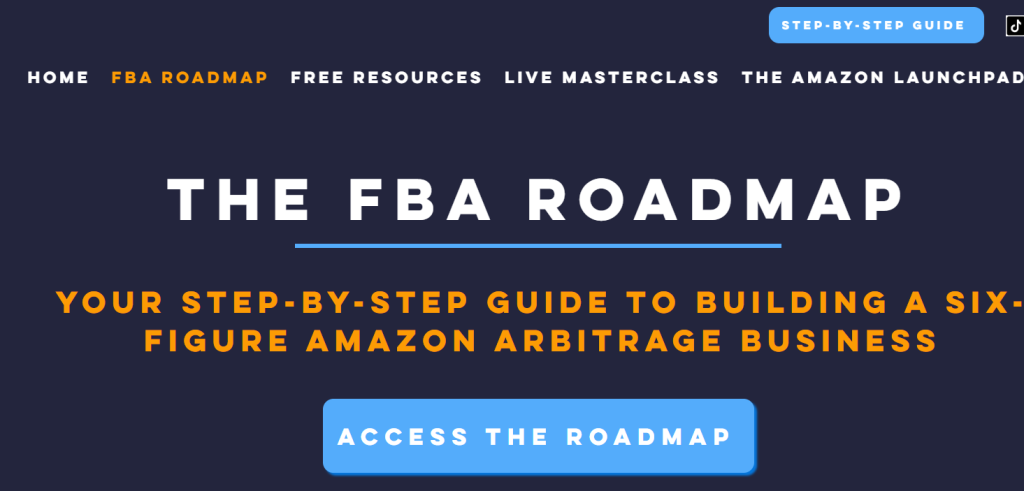
The FBA Roadmap is Warner Fields’ flagship Amazon arbitrage course. It teaches you how to buy brand-name products from retailers and resell them on Amazon for a profit.
The focus is on online arbitrage, not private labeling or building your own brand.
Inside the training, you’re shown how to:
-
Set up your Amazon seller account properly
-
Get ungated for restricted brands and categories
-
Find profitable products using data and software
-
Start with FBM, then move to FBA as you scale
-
Manage inventory, prep centers, and pricing tools
-
Use credit and cash flow strategies to reinvest profits
This is not a “push-button” system. It’s an operational business that requires sourcing, monitoring, restocking, and constant compliance.
Who Created The FBA Roadmap?
The course was created by Warner Fields, a long-time Amazon seller and the face behind the Fields of Profit brand.
Warner is not anonymous. He has a visible online presence, a large social following, and years of Amazon experience. He also co-owns tools like SellerAmp and Boxem, which are commonly used in arbitrage workflows.
He claims to have scaled his own Amazon business from a small starting budget to over $600K in annual sales, and there’s no reason to believe he hasn’t sold successfully on Amazon.
That said, selling on Amazon successfully in the past and teaching people to do it today are not the same thing — especially as the platform becomes more restrictive.
How Amazon Arbitrage Actually Works (In Reality)
Amazon arbitrage looks simple on the surface: buy low, sell high.
In reality, the work is in the details.
You’re constantly dealing with:
-
Changing Amazon rules
-
Brand restrictions and IP complaints
-
Price wars and Buy Box competition
-
Rising shipping and prep costs
-
Inventory risk if products stop moving
-
Account health metrics that must stay perfect
This is why I often compare Amazon arbitrage to operating inside someone else’s ecosystem. You don’t set the rules, you adapt to them.
The FBA Roadmap does a good job teaching the process, but it cannot remove these underlying risks.
What’s Included Inside The FBA Roadmap
The training itself is fairly comprehensive.
You get structured lessons covering the full arbitrage workflow, from account setup through advanced sourcing. There are live Zoom calls for Q&A, access to a private Discord community, and walkthroughs for the tools used in the process.
You’re also introduced to third-party software for product analysis, repricing, reimbursements, and shipping logistics. Some discounts are included, but ongoing tool costs are part of the business.
For self-starters who like structured systems, the course content itself is not the weak point.
Costs, Upsells, and Reality Checks
The base course costs under $600, which is relatively affordable for this space.
However, the real cost of Amazon arbitrage is inventory.
Most people realistically need:
-
$1,500–$5,000 to start
-
Ongoing cash to restock winners
-
Budget for software subscriptions
-
Prep center and shipping fees
There are also optional upsells for group coaching, consulting calls, and one-on-one support. These aren’t mandatory, but many beginners end up considering them once they hit friction.
This is not a low-capital side hustle.
What Student Reviews Are Saying
Feedback on The FBA Roadmap is generally positive, though limited in volume.
Students often say:
-
The course fills gaps not covered on YouTube
-
The Discord community is helpful
-
Live calls provide accountability
Criticism tends to focus less on the course and more on the business itself, especially the pressure of cash flow, competition, and Amazon’s control over accounts.
That’s an important distinction.
Who The FBA Roadmap Is (and Isn’t) For
This model may suit you if:
-
You’re comfortable tying capital up in inventory
-
You’re willing to follow strict platform rules
-
You don’t mind thinner margins
-
You can spend consistent weekly time sourcing products
-
You accept that Amazon controls the playing field
It’s probably not for you if:
-
You want predictable, hands-off income
-
You dislike operational complexity
-
You want ownership of an asset
-
You’re uncomfortable with platform risk
-
You’re starting with very limited capital
A Real Alternative (Why I Moved Away From Amazon)
I used to sell on Amazon myself. What eventually pushed me away wasn’t lack of knowledge — it was lack of control.
With Amazon arbitrage:
-
You don’t own the customer
-
You don’t own the platform
-
You don’t control policy changes
-
You can lose the business overnight
The alternative I personally prefer is much less flashy, but far more stable.
Instead of reselling products under someone else’s rules, it focuses on owning simple digital assets that generate leads for local service businesses.
Local businesses already pay for enquiries every single day. When you control the asset that produces those enquiries, income becomes easier to explain, defend, and scale.
It’s not instant, but it’s predictable, which matters far more long-term.
👉 See my No.1 recommendation here
Final Verdict: Is The FBA Roadmap Worth It?
The FBA Roadmap is a legitimate course teaching a real Amazon arbitrage model.
However, Amazon arbitrage itself is not beginner-friendly, passive, or low-risk — especially in 2026.
If you understand the constraints, have sufficient capital, and are comfortable operating under Amazon’s control, the course can give you structure.
If you want ownership, stability, and fewer moving parts, there are better models.
That’s why I no longer build businesses inside platforms I don’t control.
👉 This is the model I personally recommend instead
FAQs
Is The FBA Roadmap a scam?
No. It teaches a real business model. The risk lies in Amazon arbitrage itself, not fake promises.
Can beginners succeed with it?
Some do, but only with sufficient capital, discipline, and time.
Is Amazon arbitrage passive income?
No. It’s operational and requires constant monitoring.
Do I own a business if I do Amazon arbitrage?
You own inventory, not the platform, customers, or traffic.
Would I start with Amazon arbitrage today?
Personally, no. I prefer models where I control the asset and income source.
👉 This is the model I personally recommend instead

Mark is the founder of MarksInsights and has spent 15+ years testing online business programs and tools. He focuses on honest, experience-based reviews that help people avoid scams and find real, sustainable ways to make money online.