
If you’ve been anywhere near the “make money online” corner of YouTube between 2018 and 2022, you’ve seen Kevin David’s face.
The thumbnails were unmissable. Wide eyes. Pointing at stacks of cash. Titles screaming about passive income, Amazon FBA empires, and quitting your 9-to-5 in 90 days.
At his peak, Kevin David had over 1.2 million YouTube subscribers, hundreds of thousands of followers across social media, and what appeared to be a thriving education empire teaching people how to sell on Amazon.
He was everywhere — podcast circuits, YouTube collaborations with Graham Stephan and Meet Kevin, and a seemingly endless stream of ads promising financial freedom.
Then, in November 2022, the Federal Trade Commission shut it all down.
And what they uncovered wasn’t pretty.
If you’re researching Kevin David right now — maybe you saw an old video, maybe someone recommended one of his courses, or maybe you’re just curious what happened — this is the full, honest breakdown. No affiliate links. No sugarcoating.
Before we go further: if you’re serious about building a real online business — one that generates actual recurring revenue without the hype — check out my #1 recommendation here. It’s the business model I recommend above everything else I’ve reviewed on this site, and I’ll explain why at the end of this article.

Now let’s talk about Kevin David.
Who Is Kevin David?
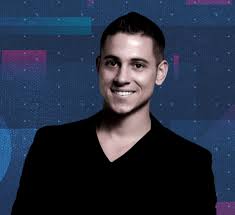 His full name is Kevin David Hulse. He was born in 1991 and grew up in Oregon before attending Oregon State University, where he studied accounting. After graduating, he landed a job as a privacy consultant at Facebook’s headquarters in Menlo Park, California.
By his own account, working at Facebook was fine but unfulfilling. He wanted more. He started exploring side hustles and eventually discovered Amazon FBA — Fulfillment by Amazon — where third-party sellers ship products to Amazon’s warehouses and let Amazon handle storage, shipping, and customer service.
Kevin claims he launched his first Amazon product within 30 days of learning the model. Whether or not the timeline is exactly accurate, he apparently did find success selling on Amazon. That success — combined with his natural talent for YouTube content — is what launched everything that came next.
He branded himself as “THATLifestyleNinja” and started posting YouTube videos about Amazon FBA, Shopify dropshipping, and Facebook ads. His content was polished, his energy was high, and his timing was perfect. The “make money online” YouTube niche was exploding, and Kevin was one of the first to truly master the formula.
The Kevin David Course Empire
At his peak, Kevin David wasn’t just a YouTuber. He was running a full-scale education business. Here’s what he offered:
| Program | Price Range | What It Covered |
|---|---|---|
| Amazon FBA Ninja Masterclass (Zon Ninja) | $997 – $1,997 | Product research, sourcing, listing optimization, PPC |
| Facebook Ads Ninja Masterclass | $997 – $1,500 | Facebook advertising for e-commerce and lead gen |
| Shopify Dropshipping Course | $997 | Setting up and scaling a Shopify store |
| Digital Course Secrets | $997 | How to create and sell your own online courses |
| ZonBase Software | $37 – $97/month | Amazon seller tools (keyword research, product finder) |
| Amazon Automation (AMZDFY / Done-For-You) | $20,000 – $100,000+ | Fully managed Amazon store service |
| Crypto Automation | Up to $85,000 | Crypto trading bot and automation |
The YouTube channel served as the top of the funnel. Free content pulled viewers in, then the upsell machine kicked in — from low-ticket courses to high-ticket “done-for-you” services.
At his peak, Kevin claimed that over 500,000 people had taken one of his courses. His estimated revenue between 2017 and 2021 was at least $52 million.
That’s an extraordinary number. And it’s exactly the number the FTC focused on.
What the FTC Actually Found
On November 16, 2022, the Federal Trade Commission filed a complaint against DK Automation, LLC and its owners — Kevin David Hulse and David Shawn Arnett — in U.S. District Court for the Southern District of Florida.
The complaint was comprehensive. Here’s what the FTC alleged:
Deceptive earnings claims. Kevin David and his partner made repeated promises about the income buyers could expect from their programs. They used testimonials and income screenshots that the FTC said didn’t reflect the experience of any consumer in their investigation. The bottom line, according to the FTC: most purchasers were unlikely to earn the advertised income, and many lost money.
Fake reviews and review suppression. The FTC found that DK Automation planted positive reviews on Trustpilot to bury negative ones. They also flagged legitimate negative reviews for removal and, in some cases, threatened legal action against people who left bad reviews.
Violation of the Consumer Review Fairness Act. Kevin David’s contracts included clauses prohibiting customers from disparaging the company. The FTC specifically cited a clause stating customers agreed “not to disparage, defame or demean DK Automation, its owners, managers, or development of products to any third-party in any manner whatsoever.” This directly violates federal law that protects consumers’ right to post honest reviews.
Failure to provide required disclosures. The Business Opportunity Rule requires sellers to give buyers specific disclosure documents before they purchase. The FTC said Kevin David’s companies failed to do this.
Ignoring prior FTC warnings. This is the detail that really matters. In April 2022, the FTC sent Kevin David a formal Notice of Penalty Offenses, specifically warning him about deceptive money-making claims. According to the complaint, he stopped some illegal claims after receiving the notice — but continued making others. Ignoring a direct FTC warning significantly escalates the seriousness of a case.
The crypto bot scheme. In January 2022, while already under scrutiny, Kevin David launched a cryptocurrency trading bot program. The marketing promised it was the “#1 secret passive income crypto trading bot” that would “generate profits for you even while you sleep.” Consumers paid thousands — in some cases up to $85,000 — for this program. The FTC said these claims were false or unsubstantiated.
The $53 Million Judgment
The total monetary judgment against Kevin David Hulse and David Arnett was nearly $53 million.
That number reflects the FTC’s estimate of the money consumers lost through these programs between 2017 and 2021.
However, the judgment was partially suspended because the defendants claimed they couldn’t pay the full amount. They agreed to turn over $2.6 million for consumer refunds instead.
Here’s the kicker: the FTC explicitly stated that if Kevin David or Arnett were found to have lied about their financial condition, the full $53 million would be immediately due.
Think about that for a moment. A man who built his brand around Lamborghinis, luxury apartments, and “8-figure” income claims was telling a federal court he couldn’t afford to pay what he owed.
The Refunds — And What Victims Actually Got Back
In March 2024, the FTC began distributing $2.8 million in refunds via PayPal to 890 consumers who were harmed by DK Automation’s schemes.
Do the math. $2.8 million divided among 890 people averages about $3,146 per person. For consumers who invested $20,000 to $100,000 in “done-for-you” Amazon stores or crypto automation, that’s pennies on the dollar.
By November 2024, the FTC sent a second round of refunds to additional victims.
Some victims had invested their children’s college funds. Others had taken out loans. The FTC complaint comments section is filled with people asking how to get their money back, wondering if they can file class action lawsuits, and expressing frustration that the FTC wasn’t doing enough.
The Programs He Was Selling — Were They Any Good?
This is where I want to be fair.
Kevin David’s YouTube content — the free stuff — was actually decent for its time. His videos on Amazon FBA basics, product research, and Facebook ads contained real, actionable information. For someone completely new to e-commerce in 2018 or 2019, his free content was a reasonable starting point.
The Zon Ninja Masterclass (his Amazon FBA course) taught a legitimate business model. Amazon FBA is a real business. People do make money selling private-label products on Amazon. The model itself isn’t a scam.
The problem wasn’t the concept. It was the execution and the promises around it.
The paid courses were, by most accounts, surface-level for the price. The $997–$1,997 courses covered material that was available elsewhere for a fraction of the cost — or free on YouTube. The upsell funnel was aggressive: buy the course, then buy the software (ZonBase), then buy the done-for-you service, then buy the coaching, then buy the crypto bot.
Each step up the ladder cost more money and delivered less value relative to the price.
The “done-for-you” Amazon automation service was where the real damage happened. Consumers paid $20,000 to $100,000+ expecting a fully managed, profitable Amazon store. What they got, according to the FTC and numerous victim accounts, was stores that never generated meaningful revenue — if they generated any at all.
The “Done-For-You” Amazon Stores — Where the Real Damage Happened
The courses were one thing. Overpriced, sure. Aggressive upsells, absolutely. But the real victims of Kevin David’s operation were the people who bought into the “done-for-you” Amazon automation programs.
The pitch was irresistible if you didn’t know better. For $20,000 to $100,000+, Kevin David’s team would build, stock, and manage a complete Amazon store for you. You’d be a silent partner in a “turnkey Amazon empire” that generated “passive income on autopilot.”
The FTC complaint paints a different picture.
According to the commission, few consumers ever turned a profit from these automation stores. Many lost their entire investment. The stores were either poorly managed, never fully set up, or simply couldn’t compete in Amazon’s increasingly crowded marketplace.
One critical detail: the marketing promised that these were hands-off investments. But Amazon FBA — even at its best — is not passive. Product selection, supplier relationships, inventory management, PPC advertising, listing optimization, and customer service all require active attention. The idea that a $20,000 payment to a company run by an internet marketer (not an Amazon operations specialist) would generate passive returns was always fundamentally flawed.
Some victims invested money they couldn’t afford to lose. College funds. Retirement savings. Money borrowed from family. The FTC’s refund program returned roughly $3,100 per person on average — a fraction of what most victims invested.
The Crypto Bot: Doubling Down Under Pressure
What makes Kevin David’s story particularly troubling is the timing of his crypto venture.
In January 2022, while already facing scrutiny from the FTC, Kevin David launched a cryptocurrency trading bot program. The marketing was aggressive: it was called the “#1 secret passive income crypto trading bot” and promised to “build CRYPTO WEALTH” and “generate profits for you even while you sleep.”
Consumers paid between several thousand dollars and $85,000 for this service.
This was during a period when the FTC was actively warning Kevin David about deceptive money-making claims. He’d received a formal Notice of Penalty Offenses in April 2022. The crypto launch came after he was already on the FTC’s radar.
To launch a new, expensive, unsubstantiated money-making scheme while under federal investigation shows either extraordinary hubris or a fundamental inability to read the room. Either way, it tells you everything you need to know about the priority hierarchy: revenue first, compliance second.
The crypto bot launch is one of the reasons the FTC’s complaint was as severe as it was. It demonstrated a pattern of behavior, not an isolated mistake.
The Affiliate and Influencer Machine
Kevin David didn’t build his empire alone. He built it through one of the most effective affiliate networks in the YouTube guru space.
Here’s how it worked: Kevin David offered generous affiliate commissions to other YouTubers and influencers who promoted his courses. Given that some courses cost $997–$1,997 and the automation packages went up to $100,000+, even a modest commission percentage meant significant payouts.
This created a flywheel effect. Major YouTubers promoted Kevin David. Their audiences trusted the recommendations. New customers bought courses. Kevin made money. Affiliates made money. Everyone won — except the customers who didn’t see results.
The affiliate model also explains why so many early “Kevin David reviews” were glowing. Most of them were written by people earning commissions on sign-ups. The reviews weren’t objective — they were sales pages with affiliate links.
This is one of the most persistent problems in the online education space. When the person reviewing a product earns money if you buy it, the review is compromised by default. It’s not journalism — it’s marketing disguised as journalism.
It’s one reason I don’t promote Kevin David (or most of the people I review on this site). My recommendations are based on what actually works for people trying to build real businesses, not on which program pays the highest affiliate commission.
Where Is Kevin David Now?
This is the part most 2024 and 2025 reviews miss.
After the FTC settlement, Kevin David went largely quiet. His YouTube channel still exists with its 1.2 million subscribers, but new uploads are sparse compared to his 2018–2021 peak. His website, officialkevindavid.com, is still live but reads like a time capsule from his pre-FTC era.
His Instagram shows 417K followers but minimal activity.
The DK Automation website — the entity that ran the Amazon and crypto schemes — has been shut down, as required by the settlement.
Kevin David is not currently in prison. The FTC action was civil, not criminal. He paid the $2.6 million settlement, is barred from making unsubstantiated earnings claims, and must comply with the Business Opportunity Rule going forward.
But the $53 million judgment hangs over him. If the FTC determines he misrepresented his finances during the settlement process, the full amount becomes due immediately.
For all practical purposes, Kevin David’s run as an online guru is over. The brand is toxic. The FTC case is the first thing that comes up when you search his name. And unlike some other figures in this space who’ve weathered controversy, Kevin David hasn’t attempted a public comeback or rebrand.
The YouTubers Who Promoted Him
One detail from this story that doesn’t get enough attention: several major YouTubers actively promoted Kevin David.
Graham Stephan, Meet Kevin, and Shelby Church all ran sponsored segments or promotional content for Kevin David’s programs. After the FTC action, none of them publicly addressed their role in promoting him.
This matters because it highlights a fundamental problem in the “make money online” ecosystem. When big YouTubers promote someone, their audience trusts the recommendation. They assume due diligence was done. In most cases, the only due diligence performed was “how much is the sponsorship deal worth?”
It’s worth asking: if Graham Stephan’s audience lost money because they trusted his promotion of Kevin David, where does responsibility lie?
I’m not saying those YouTubers committed any crime. But it’s a reminder that sponsorships aren’t endorsements — even when they look and feel exactly like endorsements.
The Patterns Worth Recognizing
Kevin David’s story follows a playbook that’s become depressingly common in the online education space:
Step 1: Find a legitimate business model. Amazon FBA is real. Facebook ads work. Shopify stores can make money.
Step 2: Build a personal brand teaching that model. YouTube content, social proof, lifestyle imagery.
Step 3: Launch courses at premium prices. $997 to $1,997 for information available elsewhere at a fraction of the cost.
Step 4: Create high-ticket “done-for-you” services. This is where the real money is — and where the real harm happens. Charge $20K–$100K for automated businesses that rarely deliver.
Step 5: Suppress negative reviews and double down. Threaten legal action against unhappy customers. Plant fake positive reviews. Keep the funnel running.
Step 6: Pivot to the next trend when heat builds. In Kevin David’s case, this was crypto. For others, it’s AI, trading, or whatever’s trending.
If you recognize this pattern, you can protect yourself from the next Kevin David. Because there will always be a next one.
What About Amazon FBA in 2026?
Since Kevin David’s name is so closely linked to Amazon FBA, it’s worth addressing the model itself.
Amazon FBA still works in 2026. People are still building profitable Amazon businesses. But the landscape has changed dramatically since Kevin David’s peak years:
The market is significantly more competitive. Finding profitable products requires more sophisticated research, higher initial investment, and better execution than it did in 2018.
Amazon’s fees have increased substantially. Between FBA fees, advertising costs, and storage fees, margins are thinner than they used to be.
Chinese sellers dominate many product categories. Competing on price alone is nearly impossible when you’re sourcing from the same suppliers as sellers who ship directly from Chinese warehouses.
The courses that were cutting-edge in 2019 are now outdated. Amazon’s algorithm, advertising platform, and policies have changed dramatically.
None of this means Amazon FBA is dead. But it does mean that the “start selling on Amazon with $500 and quit your job in 90 days” pitch was never realistic — and it’s even less realistic now.
If you genuinely want to build an Amazon business in 2026, you’re looking at a minimum of $5,000–$10,000 in product investment, months of learning, and a willingness to iterate on product selection and marketing strategies. It can work — but it’s a real business that requires real capital and real effort, not a “done-for-you” service that generates passive income while you sleep.
How to Spot the Next Kevin David
Kevin David’s story isn’t unique. He’s just one of the most visible examples of a pattern that repeats itself constantly in the online business space. Here’s how to protect yourself:
Check for FTC or legal actions. Before buying any high-ticket course or program, search “[person’s name] FTC” and “[person’s name] lawsuit.” If there’s government enforcement action, that tells you everything you need to know.
Be skeptical of “done-for-you” promises. Any time someone promises to build a profitable business for you in exchange for a large upfront payment, your alarm bells should go off. Real businesses require your involvement, at least in the beginning. Nobody cares about your success as much as you do.
Look for verified results, not screenshots. Screenshots can be faked in 30 seconds. Look for verified trade records (like Profit.ly for trading), actual Amazon store data, or third-party verification of income claims.
Evaluate the upsell structure. If you buy a $997 course and immediately start getting pushed toward a $5,000 coaching program and a $25,000 done-for-you service, the real business model isn’t teaching — it’s extracting maximum revenue from each customer.
Check Trustpilot and BBB, but look deeper. Kevin David’s companies were caught planting fake reviews and suppressing real ones. Look at the 1-star reviews specifically. If they describe a consistent pattern — refusal to give refunds, unresponsive support, products that don’t work — that’s a signal.
Ask: does this person still do the thing they’re teaching? Kevin David’s courses taught Amazon FBA. But by the end, his primary business was selling courses about Amazon FBA. When the teaching becomes the business rather than the supplement to the business, the incentives shift in ways that don’t favor the student.
The Real Lesson from Kevin David’s Story
Here’s what I take away from this, and it’s the same lesson I keep coming back to across every review I write on this site:
The business models these gurus teach are often legitimate. Amazon FBA, dropshipping, Facebook ads — these are real skills and real business models. The problem is never the model. It’s the packaging.
When someone charges you $997 for information you can learn from YouTube and a few books, that’s a bad deal. When someone charges you $50,000 for a “done-for-you” business that never turns a profit, that’s potentially fraud. And when someone shows you Lamborghinis and luxury apartments to convince you to hand over money, that’s manipulation.
The antidote isn’t cynicism. It’s education. Learn the business model first, then decide if you need a course — and if you do, make sure the person teaching it has verifiable results, transparent practices, and doesn’t need your money to fund their lifestyle.
What I’d Recommend Instead
Look, I get it. The dream of building an online business is real and valid. The desire to escape the 9-to-5 is something I understand deeply. That’s why I started this site.
But after reviewing dozens of programs — including ones that ended in FTC lawsuits — I keep coming back to one recommendation. It’s a business model that doesn’t require $50,000 in startup capital, doesn’t depend on Amazon’s changing algorithms, and generates actual recurring revenue from real clients who need your help.
It’s what I recommend to everyone who asks me where to start.
Check out my #1 recommendation here and see if it’s the right fit for you. No fake income screenshots. No Lamborghinis. Just a proven model that works.

Mark is the founder of MarksInsights and has spent 15+ years testing online business programs and tools. He focuses on honest, experience-based reviews that help people avoid scams and find real, sustainable ways to make money online.